 XPR Network · Security Utility · by ProtonNZ
Remove a wallet-drainer permission from your account.
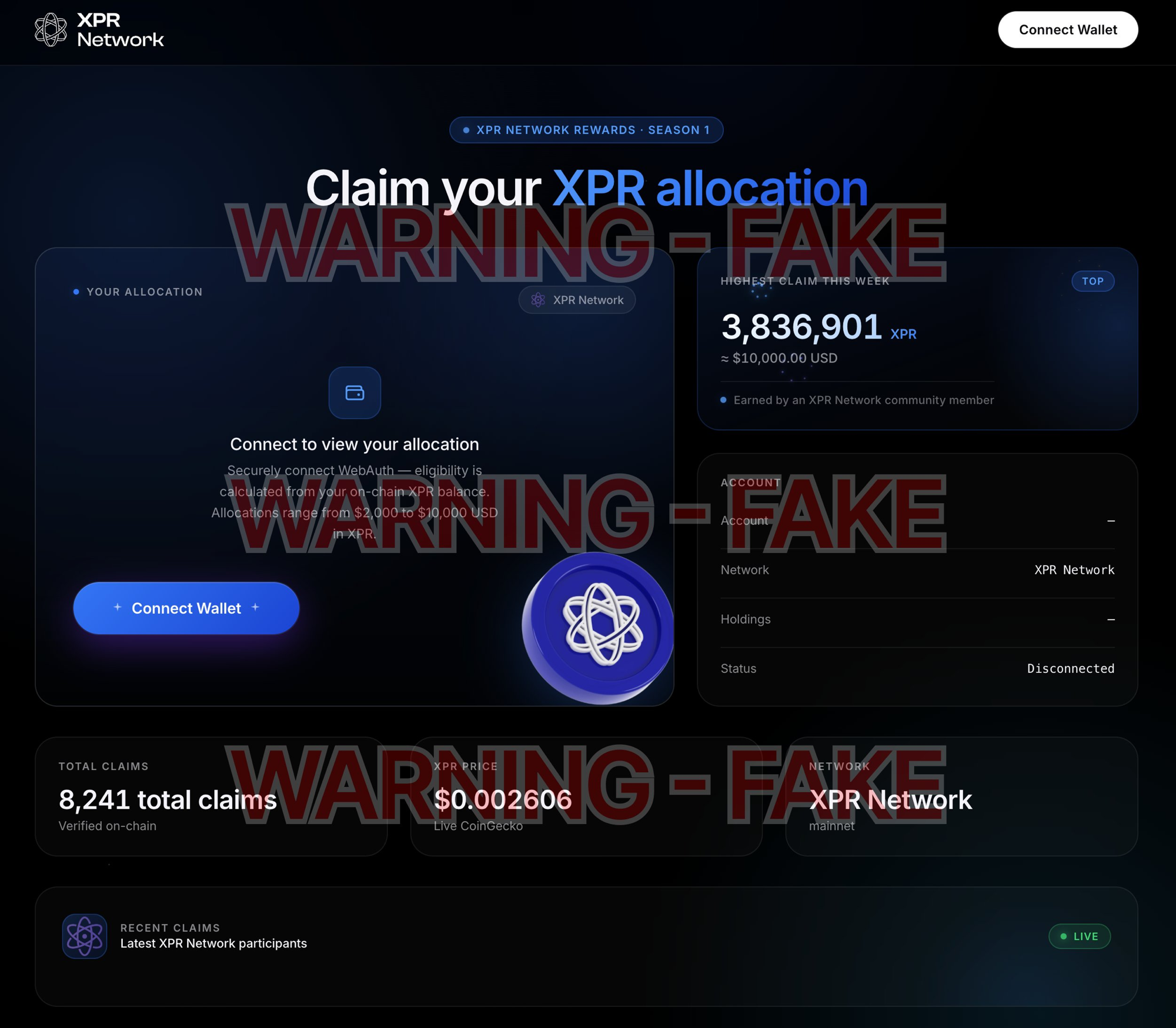
Tricked by a fake XPR airdrop (xprdrop.com, xprgrant.com, or whatever domain it's on next — it keeps rotating)? A hidden permission may still let an attacker drain you. This tool finds it and removes it in one signed transaction. Non-custodial — it never touches your keys.
🛡️ Verify before connecting: announced by @protonnz on X · served only from protonnz.com · source on GitHub. Never trust a copy on another domain.
🚫 Three rules that stop this attack
- Never open a link from a token memo. Scammers airdrop tokens whose memo links to fake sites.
- Never scan a QR code from an airdropped NFT. A new lure mints you an "XPR Reward Voucher" NFT whose image is a QR code — it leads to the same drainer.
- There are no free XPR airdrops. If a site says you can "claim" thousands of $XPR — it's a scam.
You sign it yourself — no key is stolen
It's a permission-delegation drainer. You authorize it by signing what looks like an airdrop "claim".
XPRDROP) whose memo advertises an airdrop site.claim)
controlled by the attacker and linked to your token transfers — sometimes your unstaking too.XPRDROP token whose memo links to
the fake site. Receiving it is harmless; never open the link.
How this tool helps
It inspects every permission and linked action on the account, flags anything controlled by
an account that isn't you, and — if it finds the malicious permission — builds one transaction
(unlinkauth per link, then deleteauth) for you to sign. No backend; it can only
remove permissions, never move funds.
A QR code in your NFTs instead of a link in a memo
Same attacker, new delivery. Instead of a token memo, they now mint an NFT called "XPR Reward Voucher" straight into your wallet. Its image is a QR code and its description says "Scan the QR to open the claim portal." The QR points to the same drainer — now hosted on IPFS so there's no website to shut down.
"I tried to burn it but it's still in my wallet"
The NFT is burnable — there's no on-chain trick keeping it. The catch is that some wallets' "hide" or "remove" option doesn't actually burn the asset, so nothing happens on-chain and it reappears. If you want it gone for good, burn it from AtomicHub (open the asset → Burn) rather than hiding it in the wallet. Either way, leaving it alone is safe — it does nothing on its own.
Already scanned the QR and signed something? The audit above finds and removes the malicious permission — it's the same fix.